Autistic Adults: Employment debate in Parliament

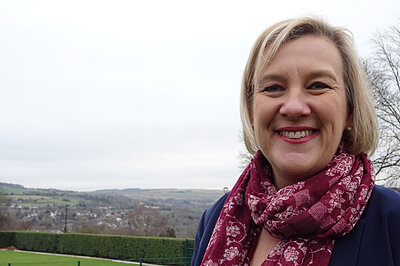
Lib Dem MP for Hazel Grove, Lisa Smart, brought a debate on employment opportunities for autistic adults in the House of Commons yesterday.
Lisa Smart (Hazel Grove) said "It is a real pleasure to serve with you in the Chair, Mr Turner. This is an important issue, and one which has risen in prominence with the increased awareness and diagnosis of autism. We have also seen extensive press coverage of the case of Tom Boyd, an autistic man who has been working at Waitrose in Cheadle Hulme, near my Hazel Grove constituency. I could not ignore the many variations of the same conversation I have had with constituents about the problems that they or their family members, like Tom, have faced getting or keeping work or thriving in their career. That so many people are facing the same issues means we are getting something wrong as a society. As the National Autistic Society says,
"'Autism influences how people experience and interact with the world. It is a lifelong neurodivergence and disability. Autistic people are different from each other, but for a diagnosis they must share differences from non-autistic people in how they think, feel and communicate.'
"An autism diagnosis should not be a barrier; it should help autistic people find how to be the best version of themselves.
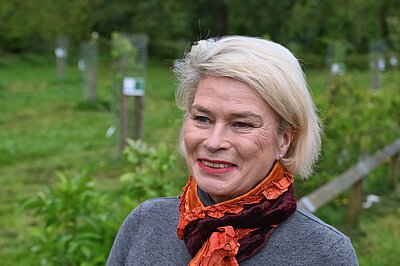
Rachel Gilmour (MP for Tiverton and Minehead) intervened: "I thank my hon. Friend for securing this important debate. In my constituency, I recently held a roundtable discussions on the state of special educational needs and disabilities education—which we know is dire. Does my hon. Friend share my belief that we should be promoting opportunities in employment for autistic people —who we know can be among the sharpest minds—so that those in education have roles to work towards?"
Lisa continued: "I very much agree with my hon. Friend about the importance of getting the right education suited to each young person to enable them to flourish in their lives and contribute meaningfully to our community.
“Clearly, the issues that my constituents have faced are not the same as every autistic person’s experience. When someone has met one autistic person, they have met one autistic person—that is a key point. All too often, autism is viewed in just one way, and it can be seen as a burden that employers have to overcome to employ that person, rather than as a range of differences and strengths.”
Following an intervention about the value of internships Lisa continued:
"People with lived experience are often the best trainers and best able to explain a situation and enable employers to adapt to get the best out of their employees. I very strongly agree with the hon. Lady’s point.
"I see it in my own area of Stockport, where the council delivers training for employers on how best to welcome neurodiverse employees into their workforce. That training is delivered by those with lived experience. Stockport council also provides adapted spaces at inclusive job fairs. That enables it to support attendance by those for whom busy, noisy spaces do not necessarily bring out the best in them.
"As a Liberal, I want to ensure that people are viewed as individuals; that they are given a platform to be the best version of themselves; that we give our fellow citizens opportunities and not barriers; and that we ensure they are not limited by someone’s view of a category in which they happen to fit.
"I thank my constituents who have shared their experiences with me and who have very different lives, needs and experiences, but who have faced very similar problems when entering the world of work. My constituent, Bradley from Marple, has had several voluntary jobs in the past. He has done them well and he now volunteers as a digital champion in the local library. Bradley is autistic and has a speech and language condition. He is capable, reliable and determined. I was really pleased that he and his mum came to see me at my advice surgery a few weeks ago, and that they are here today. He is now on universal credit, including the disability element, but tells me that what he wants is the independence and dignity that comes with having a paid job.
"For Bradley, the problem he faces is getting over the hurdle of having a chance to prove his worth. He has applied for over 100 jobs. He has been given interviews and has passed tests, and yet is never given the job. All too often he tells me he hears the same refrain: “We have another candidate who we feel best suits the post.” Although that is said to anyone who applies for a job and they hear it from time to time, Bradley hears the same thing every time, after every interview and every successful test. That is what stings.
"Another constituent has had two jobs with the same organisation. He has been diagnosed as high functioning with attention deficit hyperactivity disorder. He has a master’s degree and a range of awards and accolades that attest to his brilliance. He also struggles to know what day of the week it is or how to cook a pizza. He fits many of the stereotypes that people have about autism. In the first job, although he was given support to help him, it did not take account of the way he processed information. Instead, he was put on a performance improvement plan, which gave him no time to embed the enabling strategies that his mentor had helped him with. Instead of being supportive, it fed into his anxiety, and such was the stress it caused that he ended up with autistic burnout and on medication.
"Fortunately, with support from his parents and some courses of cognitive behavioural therapy, he was able to start again. However, such was the lack of confidence in his own abilities that his first experience caused, he applied for a much less senior role. This time around, though, the experience was a world apart. He had a structured induction that gave him all the information he needed to settle into a new role. Similarly, when he starts a new project or task, he is introduced in a way that gives everyone the information they need to work well with him, such as sharing with any new colleagues how he prefers to receive information related to the task. He is now a valued high-performing member of staff ready to step back up the career ladder, and his mental health is in a completely different, far more positive place.
"Those two wildly different experiences are with the same organisation, the civil service, which shows the need for best practice to be implemented much more consistently. My constituent is someone who has the potential to do things that few other people can, and when his job is built to get the best out of him, he flies. When it fails to take account of his needs, he crashes. I suggest that in a world where we hear all too frequently from some politicians demeaning descriptions of the lives that autistic people will have, we instead need to work on removing barriers that stop them living the right life for them.
"A Stockport council officer working in this area reports interesting conversations with employers about the fact that adapting the business to be more inclusive is really, in his words, “about looking at what skills a person can bring to the role and that isn’t as difficult as people first think. It’s about listening and understanding. It certainly doesn’t stop you being successful and profitable and it might actually help you!”
"Two of my constituents faced challenges when starting and running their own businesses. Both of them set up their own companies—one supporting people with autism and ADHD and the other a small business selling games and toys. In both cases, their efforts to run their companies were undermined when they were in what we could term an irregular part of running a company. In the first case, it was going through the set-up of the company, which took longer than expected. In the second, it was when they missed an email they were not expecting from Companies House. In both cases, my constituents struggled with the sorts of activities that too often people and processes take for granted: making calls, sending emails and completing documents.
"Katie, who joins us today, was allocated funding for a virtual assistant through Access to Work payments. But when her caseworker retired, her case was not reallocated and she was left facing mounting bills. To resolve it, she was forced to pursue her funding through a labyrinthine process. Were it not for her fantastic mum advocating on her behalf and further support from my superstar casework team, she would not have got it sorted out. As her mum said, ‘The process to claim completely failed to recognise her disability. It was like asking someone in a wheelchair to get out and walk up the stairs.’
"When someone has communication issues, layering inaccessible processes on top causes a struggle that is cruel. The irony is that Katie was caught out by this when she was setting up a company helping people with neurodivergent conditions. In a further twist, it was systems designed to help people like Katie into work that failed to take account of her autism.
"Those are just four examples of people’s lived experience of trying to get into or on with work. Disabled people with autism are among the least likely to be in employment of all disabled people; 34% of disabled people with autism are in employment, compared with 55% of all disabled people and 82% of non-disabled people. The Buckland review of autism employment found that adjustments for autistic employees are highly variable, and that the onus is normally on the autistic employee to identify and advocate for the adjustments that they need. That is why the Liberal Democrats have campaigned for there to be obligations on employers and local authorities to provide appropriate care assessments and support. To repeat the words of Katie’s mum, not doing this is “like asking someone in a wheelchair to get out and walk up the stairs.”
"All too often we are building employment practices and processes that are one size fits all, but that size is too small. People are different, and we need to take account of that. It is only by recognising the differences between people, and by allowing for them and working with them, that we will get the future workforce that we need. I look forward to the Minister telling us what more the Government plan to do to make employment work for autistic people more easily, whether that is businesses employing autistic people, who can bring so much to a workplace, or changing processes so that autistic people can work in a way that suits them and gives them a platform to thrive.
"Schemes such as Access to Work, Connect to Work or Disability Confident certainly exist, but my inbox suggests that too many people with skills and talents are falling through the gaps. I am particularly keen to hear when the Minister expects to publish a response to the recommendations made by the independent panel of academics led by Professor Amanda Kirby.
“I really want to thank my constituents who have taken the time to share their experiences. Some of them are here today, and others are watching online. I hope that this place will change things for the better, so that we can do real justice for all the autistic people who just want the same opportunities as everyone else—to work, to live their best life and to thrive.”
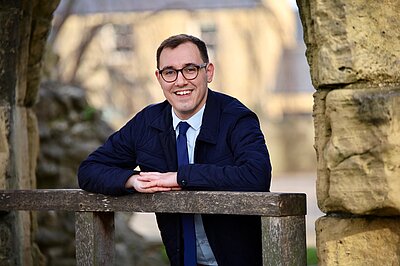
Harrogate and Knaresborough MP Tom Gordon said, "It is a pleasure to serve under your chairship, Mr Turner. I congratulate my hon. Friend the Member for Hazel Grove (Lisa Smart) on securing the debate. She outlined some fantastic best practice in Stockport, where I know she was a local councillor for many years. I am sure some of that work is down to her powerful advocacy for her constituents—those who are here today and those who are not.
"I thank all the families, campaigners and organisations who fight every day for change, not least because those in my own constituency, including our local branch of the National Autistic Society, who I meet regularly, have told me time and again about the sheer exhaustion that comes from trying to get a system that is supposed to help people to actually do what it is meant to do and what it promises. Many people face a broken path from school to work, with the journey from childhood from adulthood a series of locked doors. We hear of many families waiting for months—often years—for autism assessments, and we hear about teachers, undertrained and underfunded, struggling to provide the right support. One mother in Harrogate told me that by the time her son was finally diagnosed he was already told he was lazy, disruptive and difficult. How is any child meant to come back from that? That line has stuck with me because if we get things wrong in school, we do not just risk a bad exam result; we risk shaping how young people see themselves for years to come, into adulthood.
“That is why the Liberal Democrats believe fixing SEND is not just about education; it is about setting children up for life, too. We need early identification, we need properly funded support plans that do not depend on parents shouting the loudest, and we need schools to be judged on how inclusive they are, not just on pupils’ grades. If we want autistic adults to thrive in work, we have to start by helping autistic children thrive in school.”
Another MP intervened with examples of projects in his constituency and Tom replied, "I am sure the hon. Gentleman is highlighting some fantastic work. I completely agree; there are great examples out there. What we need is a system that holds those up and champions them, and encourages people to do the same and do better across our country.
“That brings me to Access to Work, a system that is currently shutting people out. This is another part of the broken pipeline, and I want to be really clear: it is not fit for purpose. Everyone I speak to tells me that it is failing them. It was designed to support people but simply falls short. It is also failing the employers who want to do the right thing but cannot navigate the red tape. I have heard examples of businesses that reached out to try to secure training for staff, but that fell on deaf ears and was never taken up. And it is failing the economy by wasting talent that we desperately need.”
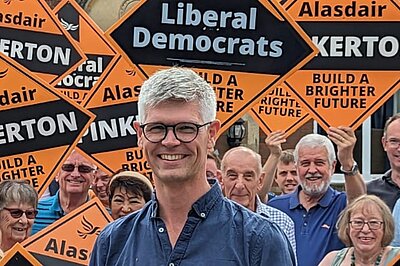
Al Pinkerton, MP for Surrey Heath, asked “My constituent John has experienced prolonged periods of unemployment —he has been employed for only four of the past 14 years—and I think his experience is redolent of that of many other people with autism who feel that they are not getting the support that they need. Does my hon. Friend agree that not only do potential employees need support, but employers need education to help them facilitate economic independence for adults with autism?”
Tom responded and continued, "I completely agree. This comes back to one of the systemic barriers that people face throughout the Access to Work system, and the barriers to employment for autistic people.
"Access to Work sounds good on paper. In practice, it has become a bureaucratic maze that far too many autistic people simply cannot navigate. I have spoken to constituents who waited six months, nine months and even more than a year for applications to be processed. It is simply not good enough. I have heard from people who have lost job offers because the scheme could not provide basic adjustments in time, from others whose support was suddenly cut back without explanation, and from employers, especially small ones, who gave up trying to help because the process was so unclear and too slow.
"Let us be honest: if Access to Work was a business, it would have gone under years ago. It is inefficient, unaccountable and detached from the lived reality of the people it is meant to serve. There is no consistency, no urgency and seemingly no understanding of autism. Many of the assessors have had little to no training in neurodiversity. Applicants are repeatedly asked to prove their condition and justify basic needs, and to fill in complex forms that would test the patience of anyone, let alone someone who suffers from communication or executive function issues that are daily challenges. It is not empowering; it is humiliating.
"The worst part of all is that people’s lives are on hold while they wait. I met one man who was offered a job by a local company. He was up front about his needs, honest, open and hopeful, and the employer was supportive, but trying to get adjustments in place through Access to Work took so long that he ended up losing the job offer. His confidence was shot. There is nothing about that that is acceptable, in any way, shape or form. Worryingly, that is not an isolated story. This is happening up and down the country, and it is something that people regularly email me about. What makes it worse is that we have known for years how to fix it. Backlogs can be cleared with proper staffing and resourcing. Delays can be reduced by digitising the system and simplifying forms. Training can be improved so that assessors actually understand neurodiversity. But the Government are seemingly sitting on their hands.
"The Buckland review made sensible suggestions and recommendations: awareness campaigns, better recruitment practices, inclusive workplace design and real career progression support. None of that requires new legislation. What did we get instead? Nothing. A review was launched and delayed, and now we are told that we might not get a proper Government response at all. It is really frustrating. Autistic people, who have waited long enough for change, are seemingly left out in the cold again.
"I have heard about recruitment processes that are commonly exclusionary and job adverts with open-ended interview questions that just make it impossible for people. When I met the Harrogate branch of the National Autistic Society, we spent about an hour and a half talking through these barriers. What really resonated with me is the desire and passion of people with autism who want to contribute, and we are simply not letting them.
"People’s fear of disclosure was also raised. They do not want to explain or even talk about their autism because they are not convinced that employers will help. One constituent of mine had been happily in employment for seven years, with the support of a really helpful line manager. When that manager left, there was seemingly a breakdown in the relationship with the workplace, which left her without the necessary adaptations and support. She ended up losing the job and has now been struggling to find alternative employment for two years.
"What needs to happen? We need a complete overhaul of Access to Work—not tweaks or new guidance, but a root-and-branch rebuild. That means clear targets for processing times, so that people are not left waiting for months; dedicated neurodiversity teams who actually understand the conditions that they are assessing; transparency, so that applicants can track their progress and appeal decisions easily; automatic continuity of support, so that when people change roles, they are not thrown back to square one; and, above all, trusting autistic people that they know what they need. If we did that, we would not only help thousands into work, but restore faith in a system that currently does the opposite.
"This is not meant to be about schemes and structures; it is about people. A woman in Harrogate told me that she had recently given up looking for work altogether—not because she does not want to work, but because the last time she tried to get support, she was made to feel like a fraud. She said: ‘I can cope with being autistic. I can’t cope with being disbelieved.’
"That sentence should haunt this Government. We talk endlessly in this place about productivity, growth and getting more people into work, yet we actively exclude people who want and are ready to work, because our systems are so rigid and slow.
"Fixing Access to Work will not solve everything, but it is one of the easiest, quickest and most practical steps that could make employment fairer for autistic people. If we linked that together with a proper SEND strategy that captures early need, supports families, trains teachers and equips young people with confidence, we would finally have a joined-up system that might be better at supporting people with autism from childhood into adulthood. That is what inclusion really means.
"I will end with this thought. Another constituent told me that what makes work hard for them is not being autistic, but the world around them not understanding what they need to thrive. There is a thread running through everything we have heard today. Autistic people do not need to change who they are. It is the systems, services and structures that need to change. Access to Work could be a bridge between ability and opportunity, but right now it is a barrier. Until that changes, we will keep on losing potential, wasting talent and letting people down. I urge the Minister to fix Access to Work and SEND, and to start building a society that sees autistic people not as a problem to solve, but as part of the solution."
After a response to the debate from the Minister for Work and Pensions Diana Johnson, Lisa concluded: "I am grateful to everybody who has contributed to the debate, particularly those who brought stories from their constituents. The hon. Member for Shipley (Anna Dixon) suggested changing the way that some people enter employment, and we should take seriously the idea that interviews are not right for everybody. I was disappointed to hear about Workbridge closing from the hon. Member for Northampton South (Mike Reader). That underlines the fragmented nature of the support that is available—it can look different in different parts of the country.
"Many hon. Members, including the hon. Member for Leicester South (Shockat Adam), my hon. Friend the Member for Surrey Heath (Dr Pinkerton) and the Minister, made the important point that employers need support, particularly some small employers who do not have a whole fleet of HR colleagues to work with. A number of hon. Members talked about how valuable work experience is; it absolutely can be, but there is a reason the campaign to end unpaid internships has been successful. That success has brought a sense of justice—that someone cannot go on volunteering their time without a pathway to paid employment, or a clear view as to what they are gaining from it or how they can contribute.
"I thank my hon. Friend the Member for Harrogate and Knaresborough (Tom Gordon) for talking clearly about the exhaustion that can come from fighting against and within a system that does not work well enough. He talked about how Access to Work, although it exists, is not working for too many people. He made a point that was echoed by the hon. Member for South West Devon (Rebecca Smith): of course this issue is about individuals, but it is also about growth, productivity and our whole economy.
“I am grateful to the Minister for recognising the work that is going on, but also that more needs to be done. We have not quite nailed this as a society just yet. We are missing out on the skills and talents of too many autistic people, and there is more we can all do to fix that.”